Young women uniting for early detection and breast health…
Why Early Breast Health Matters
Breast cancer is often viewed as a disease of older women, but awareness should begin much earlier. Studies show that lifestyle, genetics, and hormonal factors all influence breast health long before adulthood.
When young women understand their bodies early, they are better equipped to recognize changes and seek help promptly. Yet conversations about breast health rarely start early enough. In many communities, the topic is surrounded by silence or fear.
It is time to move from awareness to education and early action, because knowledge today can save lives tomorrow.

Early self-awareness helps girls understand what’s normal for their bodies…
The Missing Link: Youth And Breast Health Conversations
Across schools and youth gatherings, lessons on menstrual hygiene are common, but breast health is often left out. Many young girls grow up knowing how to manage their periods but not how to recognize unusual breast changes.
This gap perpetuates fear and myths. Integrating breast health into routine wellness education ensures that girls see it as part of caring for their whole bodies, not as a taboo topic.
When teachers, parents, and mentors speak openly, they normalize the conversation and build a generation that values prevention.
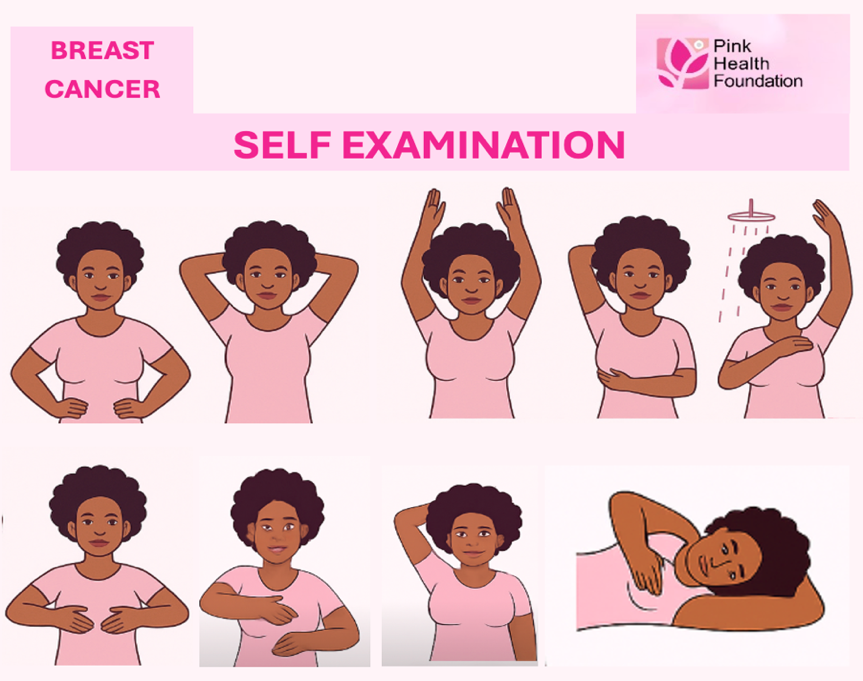
Step-by-step breast guide: A self-awareness guide to know what’s normal for you
Understanding Breast Self-Awareness
Breast health isn’t just about formal screening; it begins with breast self-awareness.
This means simply knowing what your breasts usually look and feel like so you can detect any changes early.
Things to look out for:
- A lump, thickening, or swelling.
- Changes in shape or size.
- Skin dimpling or redness.
- Nipple discharge or inversion.
If something feels unusual, report it to a healthcare provider promptly. Awareness is not fear; it’s confidence in your own body.
Breaking Myths and Fear
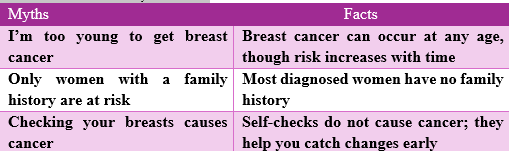
Many myths stop young women from learning or acting early. Dispelling myths encourages young women to act on facts, not fear.
Schools, Churches, and Youth Clubs: Safe Spaces for Learning
Community spaces are powerful platforms for change. Schools can host “Know Your Body” days; Churches can dedicate a Sunday to women’s wellness, and youth clubs can organize friendly health knowledge challenges. Female mentors, nurses, and volunteers can make these sessions engaging through demonstrations, songs, and Q&A games.
Pink Health Foundation’s outreach programs, such as Pad A Girl, already provide a strong model. Incorporating short breast health talks into these same gatherings fosters a seamless link between menstrual health education and early detection awareness.
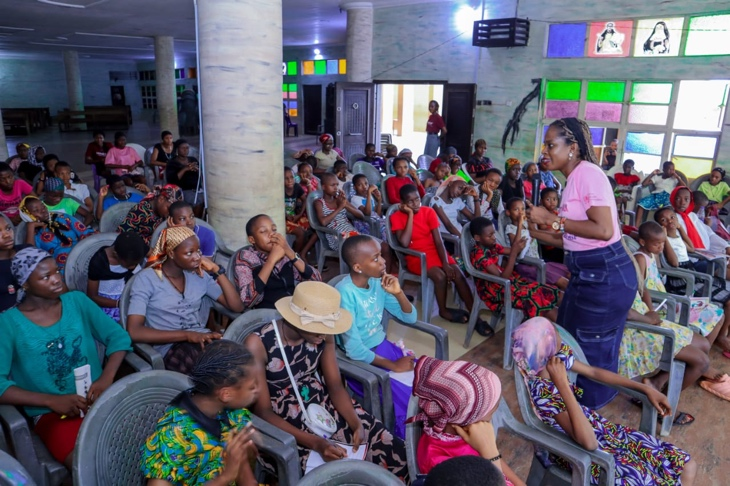
Community sessions make health education approachable and memorable.
The Power of Role Models and Storytelling
Stories inspire. When a survivor shares how early detection saved her life, it transforms statistics into hope. Young women tend to relate more when they see faces like their own leading the conversation.
Every school or youth group can invite a healthcare professional or a survivor to share their story each October, or at any other time. These stories build courage and dismantle fear, reminding girls that early action leads to survival and strength.
Moving Forward: A Call to Action
Breast health education must become a routine part of youth wellness. Let’s establish Pink Health Clubs in schools and communities where young women learn, discuss, and practice self-care. Let’s include simple breast-awareness kits and information leaflets in future Pad A Girl outreaches.
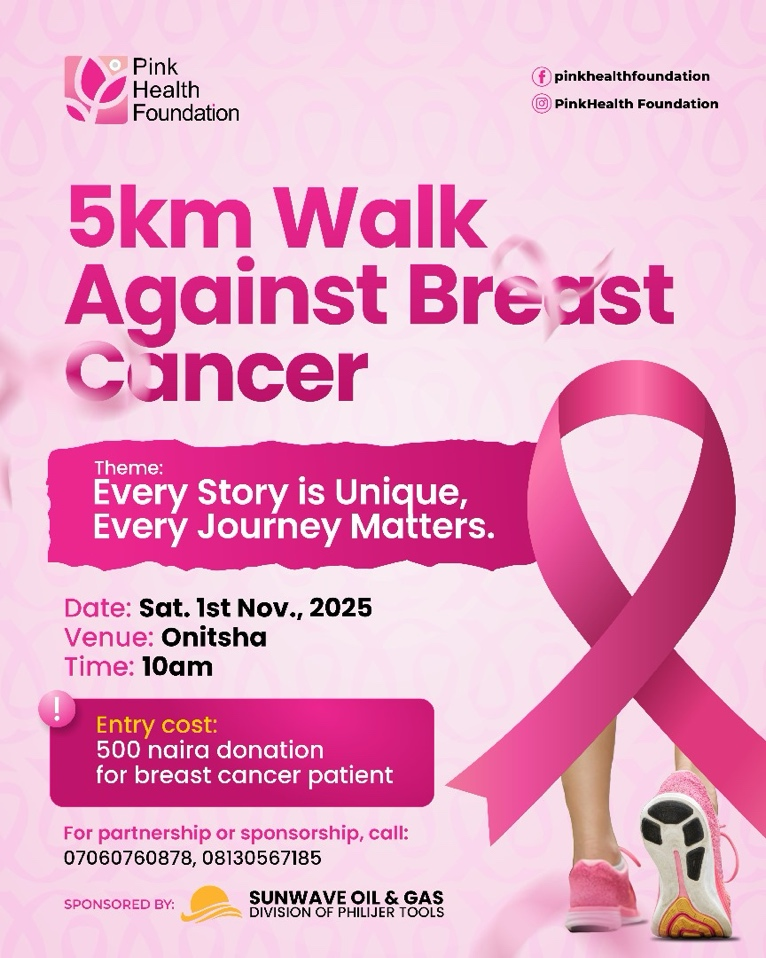
As part of our ongoing advocacy, the Pink Health Foundation continues to promote early detection through community initiatives, such as the 5km Walk Against Breast Cancer. This year’s event will take place on Saturday, November 1st, 2025, in Onitsha, under the theme “Every Story is Unique, Every Journey Matters.” These activities inspire dialogue, promote screening, and raise funds to support breast cancer patients.
Together, we can ensure that every girl learns to protect her body with confidence and compassion. Early detection saves lives. Start now, start young!
With awareness and education, every girl can live a healthier, longer, and stronger life.